Table of contents
Airlines and rail operators are quietly rewriting the rules of travel, and the shift is happening at the moment passengers click “buy”. After a turbulent decade for demand, carriers are leaning on new ticketing tech to protect revenue, cut servicing costs, and sell more tailored bundles, while regulators push harder on transparency and refunds. The result is a journey that starts earlier, feels more personalized, and, when disruptions hit, can either resolve in minutes or spiral into hours of friction, depending on the tools behind the ticket.
The ticket is becoming a “living” product
For decades, a ticket behaved like a static promise, you paid, you received an itinerary, and most changes meant phone calls, fees, and manual re-issuance. That model is being replaced by offers that can update in real time, reflecting inventory, passenger preferences, and operational constraints, and the industry has a name for it: “offer and order” retailing. The International Air Transport Association (IATA) has spent years advocating New Distribution Capability (NDC) standards, and adoption is now visible in large markets, because airlines want to control how fares and add-ons are displayed beyond traditional global distribution systems.
That pivot is not only about selling seats, it is about reshaping the entire pre-trip arc. When an airline can dynamically package a fare with baggage, seat selection, lounge access, or carbon offsets, the ticket becomes a configurable bundle rather than a commodity line item. Airlines have financial incentives to do this; ancillary revenue has grown into a major profit lever across the sector, and industry trackers such as IdeaWorksCompany have repeatedly documented how add-ons now account for a meaningful share of airline income globally, especially among low-cost carriers, but increasingly among legacy groups as well. The impact on travelers is immediate: the “best” option is less universal and more dependent on what you value, and the purchasing moment becomes a decision about comfort, flexibility, and risk, not just price.
The same logic is spreading across rail and intercity bus, where yield management has expanded beyond peak/off-peak pricing into more nuanced fare families, flexible exchange rules, and digital-only service channels. In Europe, this is reinforced by cross-border competition and by passengers mixing modes, because the ticket is no longer just for transport, it is the front door to an entire itinerary. For city-break travelers, for example, the ticketing ecosystem now increasingly includes timed-entry attractions, local passes, and transport integrations, and it is often easier to plan these layers in one flow than to stitch them together after arrival. If you are comparing options for a weekend in Central Europe and want to see how transport and activities can be lined up efficiently, you can find out here what that kind of integrated planning looks like in practice.
Personalization rises, but so do questions
“Why did the fare change?” That question has become a familiar irritation, and it is also a window into where ticketing is heading. Dynamic pricing is not new, yet the sophistication of personalization is accelerating, because carriers can test bundles, target offers, and vary conditions based on demand signals, channel costs, and customer history. Airlines argue that this lets them match travelers with products more closely, reducing the number of people paying for benefits they do not need, while increasing conversion for those who do. For passengers, though, the line between helpful tailoring and opaque price discrimination can feel thin.
Regulators are watching. In the United States, the Department of Transportation has tightened its posture on consumer protection, pushing for clearer fee disclosure and cracking down on what it sees as unfair or deceptive practices, and it has finalized rules to require automatic cash refunds in specific disruption scenarios rather than forcing vouchers by default. In the European Union, passenger-rights regimes already impose compensation obligations for many delays and cancellations, and the policy debate continues around modernization, enforcement, and the balance between consumer rights and operational realities. The common thread is that ticketing is no longer merely a sales channel, it is a compliance surface, and the more complex the offer, the more pressure there is to explain it plainly.
There is also a data dimension that travelers increasingly care about, even when they do not say it out loud. Personalization depends on collecting and connecting signals, including device identifiers, browsing patterns, loyalty profiles, and purchase histories, and that raises questions about consent, retention, and third-party access. Europe’s GDPR framework sets clear requirements, yet practical transparency varies widely across brands and intermediaries. For travelers, the trade-off is convenience versus control, because the same profile that remembers your seat preference can also shape what you are shown and what you are not. In a market where people are already juggling multiple subscriptions and apps, ticketing personalization will likely succeed where it feels genuinely useful, and stumble where it appears to manipulate.
Disruptions expose the real value of modern servicing
Nothing tests a ticketing system like a disruption. Storms, air-traffic constraints, strikes, aircraft rotations, and cascading delays can turn a simple booking into a logistical problem, and in those moments the traveler’s experience depends less on the original price and more on how quickly the ticket can be serviced. The industry knows this painfully well; mass cancellations in recent years have shown how quickly call centers and airport queues can collapse, and how frustration multiplies when passengers cannot self-serve changes or refunds.
Modern ticketing aims to make servicing faster, cheaper, and more automated. “Order” models, inspired partly by e-commerce, can simplify the back-end complexity of multiple documents and coupons, making it easier to re-accommodate passengers, adjust ancillaries, and trigger refunds without manual intervention. When these systems work, travelers can rebook in-app, receive new boarding passes instantly, and get clearer messaging about entitlements. When they do not, the experience can be worse than the old world, because the promise of self-service becomes another dead end, and staff are left with limited tools to fix it quickly.
Transparency matters here, too. A growing number of passengers have learned to scrutinize fare conditions, because the cheapest ticket can be expensive when plans change. Airlines and rail operators increasingly sell “light” products with strict rules, then offer “flex” upgrades at checkout, a structure that mirrors the broader retail trend toward unbundling. For frequent travelers, this can be rational, but for occasional travelers it can feel like a trap unless the differences are explained in plain language. In practice, the best ticketing experiences during disruptions combine three elements: clear rules at purchase, proactive notifications when plans break, and instant, usable options to recover, including refunds when the carrier cannot deliver.
Super-app itineraries are taking the lead
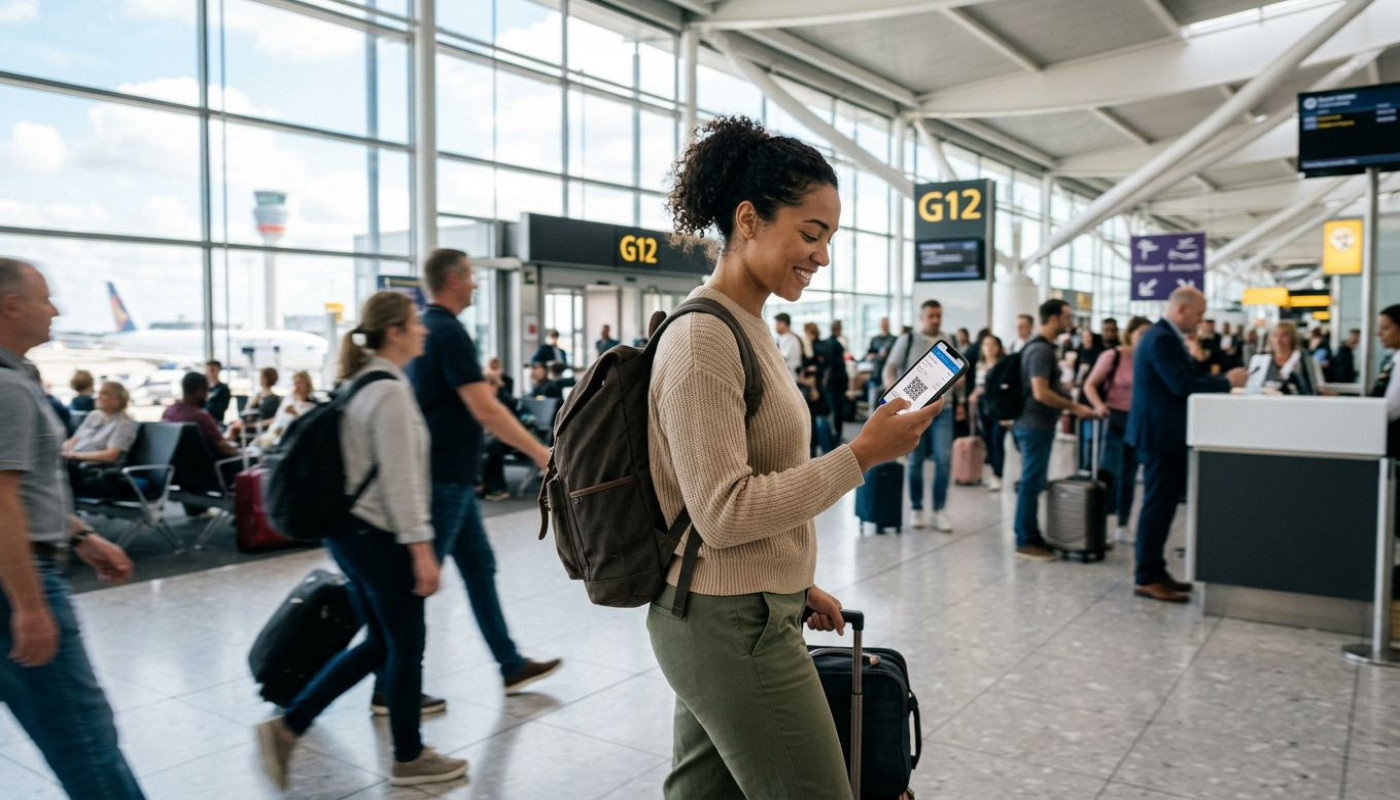
Travelers have always built itineraries, but the center of gravity is shifting from the airport counter to the smartphone. The rise of wallets, digital IDs in some jurisdictions, real-time maps, and integrated payment flows means ticketing is increasingly one step in a broader “journey management” stack. Airlines want their own apps to be that stack, rail operators want the same, and online travel agencies are fighting to remain the place where customers begin. The battle is visible in features, because whoever owns the post-purchase relationship can upsell, message, and retain.
This competition is also driven by cost. Distribution is expensive, and ticketing intermediaries can take meaningful margins, so airlines push more direct bookings, while intermediaries respond with loyalty perks, price guarantees, and multi-modal packaging. Meanwhile, technology vendors are betting that the future is not a single channel but a network of connected services, where a traveler can switch between providers without losing the continuity of their order. That is why standards matter, from NDC to newer attempts to harmonize intermodal retailing, because the smoother the data exchange, the easier it is to build an itinerary that does not fall apart when one segment changes.
For the traveler, the upside is a more seamless trip: one place to manage tickets, seats, bags, upgrades, and timing, and ideally one place to handle disruptions. The downside is fragmentation when systems do not talk, because the promise of “one tap” collapses into multiple logins, inconsistent policies, and unclear accountability. The direction of travel, however, is clear, and it favors platforms that can combine inventory with trust. In the next few years, the most successful ticketing experiences will likely be the ones that feel less like buying a fare and more like managing a plan, with controls that are obvious, refunds that are reachable, and choices that are genuinely comparable.
Before you book, use these new levers
Plan early, and price in flexibility; on volatile routes, paying more for changeable conditions can be cheaper than rebooking later. Check refund rules and fee disclosure before checkout, then keep receipts and screenshots for disputes. For city breaks, reserve key attractions and time slots in advance, budget for add-ons, and look for local discounts or tourist passes that reduce entry costs.
Similar

Can Spontaneous Detours Lead To The Most Memorable Travel Stories?

Private Driver in Monaco : you must choose Luxotica !